
When the American Backstop Cracks

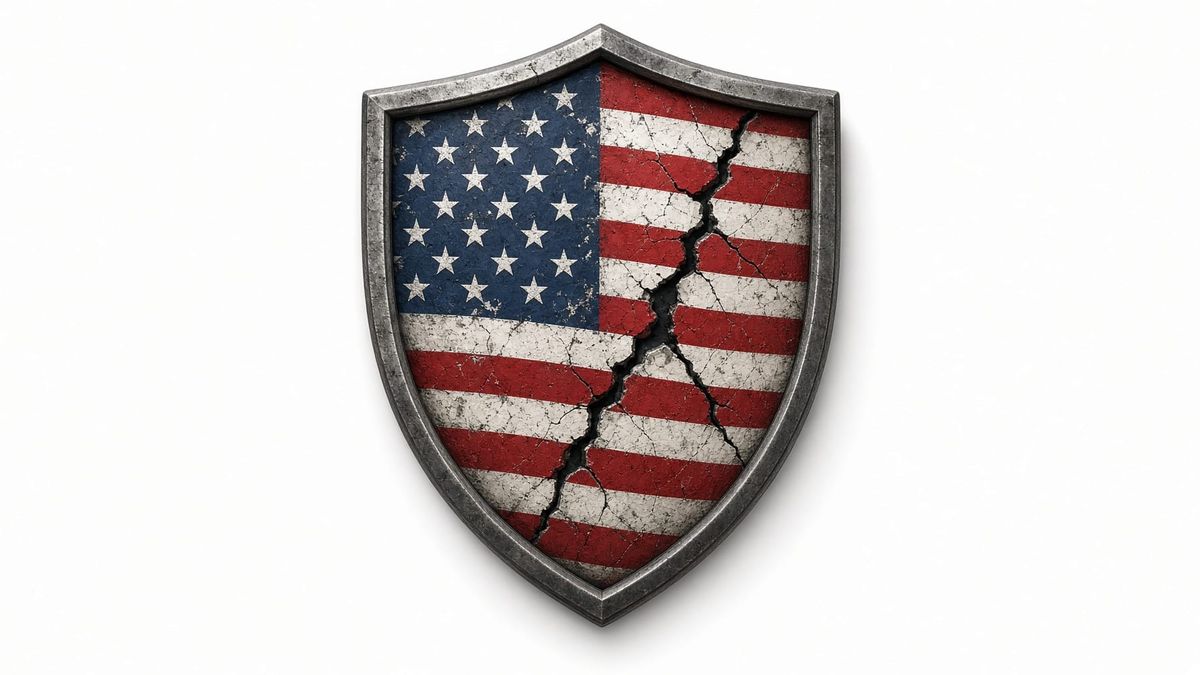
Three recent developments illustrate the consequences of declining confidence in the United States as the principal guarantor of the postwar security order. Under President Trump, American credibility has deteriorated as alliances have been treated transactionally, diplomacy has become inconsistent, and the war with Iran has consumed significant stocks of critical munitions without producing a durable strategic settlement. Allies are increasingly preparing for the possibility that the United States may not defend them, while adversaries have greater reason to test where American red lines actually lie.
The first development is the new mutual-defense arrangement between Turkey, Saudi Arabia, and Pakistan. The agreement is based on the principle that an attack on one member will be treated as an attack on the others, with Turkish Foreign Minister Hakan Fidan describing its collective-defense provision as comparable to NATO’s Article 5. The pact reflects a broader effort by all three states to reduce their dependence on existing security arrangements and to build additional regional guarantees.
Saudi participation is especially significant. Riyadh has relied for decades on the United States as its ultimate security guarantor against major external threats. Its decision to enter a formal defense arrangement with Turkey and Pakistan indicates that it no longer regards American protection as sufficient on its own. Pakistan adds a nuclear dimension. It possesses nuclear weapons and has fought repeated wars and military confrontations with India, several of which carried serious risks of escalation.
Turkey’s participation also links this new alliance to NATO. If Turkey intervened in a conflict involving Pakistan or Saudi Arabia and subsequently came under attack on Turkish territory, NATO could face pressure to respond under Article 5. Alliance politics has always involved a tension between abandonment and entrapment: states want confidence that allies will defend them, while avoiding obligations that can pull them into conflicts they did not choose. The new agreement increases the number of overlapping commitments connecting NATO, the Persian Gulf, and the India-Pakistan rivalry, and with them the number of pathways through which a regional conflict could widen.
The nuclear consequences are more serious still. Saudi Arabia now has a formal mutual-defense relationship with an established nuclear power, strengthening its options if Iran acquires nuclear weapons. Riyadh has repeatedly signaled that an Iranian bomb would force it to reconsider its own position. A weaker American guarantee increases the incentive either to pursue an indigenous deterrent or to seek stronger Pakistani nuclear assurances. Research on extended deterrence has long shown that credible alliance guarantees suppress proliferation incentives, while uncertainty about those guarantees encourages states to seek independent means of deterrence.
The second development is Russia’s increasingly aggressive probing of NATO’s boundaries and response thresholds. Russian drones and missiles have repeatedly entered NATO airspace or territory during the war in Ukraine. A drone struck an apartment building in Romania in 2026, and Polish authorities later concluded that an object recovered after another incursion was most likely a Russian Kh-101 cruise missile. Russia has also conducted a sustained campaign of grey-zone activity across Europe, including cyberattacks, sabotage, interference with rail infrastructure and undersea cables, assassination plots, and operations involving chemical agents such as Novichok.
A limited attack would give Moscow more useful information than a large conventional assault. A small territorial incursion, sabotage operation, attack on infrastructure, or missile strike presented as accidental could force NATO governments to decide whether the incident justified escalation against a nuclear-armed Russia. Each episode reveals something about response times, political divisions, escalation thresholds, and the willingness of governments to accept risk.
American uncertainty increases the value of such probing. Trump has repeatedly questioned the reliability of American support for NATO, threatened to acquire Greenland despite Denmark’s opposition, and spoken of incorporating Canada into the United States. Periodic affirmations of NATO do not remove the uncertainty created by these statements. Deterrence depends on an adversary being able to anticipate the likely consequences of aggression. If Moscow believes Washington may hesitate, disagree with European allies, or reinterpret its obligations during a crisis, testing NATO becomes more attractive.
The military balance also matters. The war with Iran consumed large quantities of Patriot, THAAD, and other high-end air-defense and precision-strike weapons. Estimates by the Center for Strategic and International Studies indicate that replenishing several key missile inventories will take years even with increased production. These are global inventories. Weapons expended in the Persian Gulf are unavailable for Europe, Korea, Japan, Guam, or a Taiwan contingency. American commitments have therefore become less predictable at the same time that the material resources available to enforce them have been reduced.
The third development is the emerging agreement between Iran and Oman over navigation through the Strait of Hormuz. Current proposals would give Iran greater authority over inbound shipping and could permit Tehran to impose transit charges of approximately 5 to 7 percent of cargo value. Roughly one-fifth of globally traded petroleum passes through Hormuz. Charges of that magnitude, together with higher insurance and shipping costs, would raise the marginal cost of supplying global energy markets.
The strategic implications are equally important. The United States has historically acted as the principal external guarantor of freedom of navigation in the Persian Gulf. An Iran-Oman arrangement negotiated largely without American participation would shift practical control of the strait toward the two coastal states on terms favorable to Tehran. If Iran gains the ability to impose discriminatory charges or restrict passage by American or Israeli vessels, the result would be a substantial erosion of the navigation regime that existed before the war.
The proposed arrangement also leaves the Iranian nuclear issue largely untouched. The war was justified in large part as a means of preventing Iran from reaching a nuclear weapons capability, yet the postwar negotiations over Hormuz do not appear to establish a durable inspection regime, eliminate Iran’s enrichment capacity, or fully account for surviving stocks of highly enriched uranium. The United States may emerge from the conflict having expended scarce munitions while Iran retains important elements of its nuclear program and acquires greater leverage over one of the world’s most important maritime chokepoints.
These developments sit within a broader pattern of strategic diversification among American allies. Poland has purchased large quantities of South Korean K2 tanks, K9 artillery, FA-50 aircraft, and Chunmoo rocket systems. Baltic states have expanded purchases from South Korean manufacturers as well. Availability and production capacity explain much of this shift, but the broader effect is to reduce dependence on American and Western European defense suppliers.
Germany and other European states are expanding the European Sky Shield Initiative and increasing investment in European air-defense production. France has reopened discussion of a wider European role for its nuclear deterrent, while German leaders have acknowledged discussions with Paris over nuclear deterrence. France has traditionally guarded independent control over its arsenal very closely, so the fact that these discussions are occurring reflects growing concern over the durability of American extended deterrence.
The same problem is visible in Asia. Chinese military exercises around Taiwan have become larger, more frequent, and more operationally realistic, including scenarios resembling blockade operations, strikes on infrastructure, and efforts to prevent external intervention. Beijing does not need certainty that the United States would remain passive. A lower estimate of the probability, speed, or scale of American intervention could be enough to make coercive operations appear more feasible.
South Korea presents the clearest proliferation risk. Polling by the Asan Institute has found support for an independent South Korean nuclear arsenal above 70 percent, while confidence that the United States would actually use nuclear weapons in South Korea’s defense is substantially lower. Strong support for the American alliance coexists with growing support for an independent deterrent. South Koreans increasingly appear to regard the two as complementary rather than mutually exclusive.
North Korea has also become more dangerous through its relationship with Russia. Pyongyang has supplied Russia with artillery ammunition, ballistic missiles, and troops, receiving money, political support, and potentially military technology in return. North Korean forces are gaining combat experience against Ukrainian units supported by Western intelligence, drones, electronic warfare, precision weapons, and modern surveillance systems. A better funded and more experienced North Korea increases pressure on both South Korea and Japan while confidence in American extended deterrence is being questioned.
The cumulative effect is a security environment in which regional risks reinforce one another. Iran may acquire nuclear weapons, encouraging Saudi Arabia to seek its own deterrent or a stronger Pakistani guarantee. Turkey could become involved in a conflict generated by its new alliance and subsequently create difficult obligations for NATO. Russia may attempt a limited attack or hybrid operation designed to test NATO cohesion. China may conclude that a blockade of Taiwan can be attempted without provoking immediate American military intervention. South Korea and, eventually, Japan may reconsider whether American extended deterrence remains sufficient.
The theoretical logic is well established. Glenn Snyder’s work on alliance politics shows how fears of abandonment and entrapment shape state behavior. Scott Sagan and Alexander Lanoszka demonstrate the connection between insecurity, alliance credibility, and nuclear proliferation. Robert Jervis’s security dilemma explains how defensive moves by one state can provoke countermeasures that leave all sides less secure. Daryl Press’s work on credibility emphasizes that states assess commitments partly through present capabilities and interests rather than historical reputation alone. American credibility therefore depends on what Washington appears willing and able to do now.
The United States spent decades constructing an alliance system that reduced the need for allies to arm independently, restrained nuclear proliferation, and raised the costs of aggression against American partners. Trump has weakened the predictability on which that system depends while consuming military resources that support it. His hostility toward allies, inconsistent diplomacy, and poorly executed war with Iran have increased uncertainty about both American intentions and American capabilities.
The consequences are already visible. Allies are building alternative defense relationships, increasing military autonomy, and reconsidering nuclear options. Adversaries are probing borders, testing political thresholds, and preparing military options designed to exploit hesitation and division. The risk is not confined to a major war between peer powers. A limited Russia-NATO confrontation, another India-Pakistan war, an Iranian nuclear breakout followed by Saudi proliferation, a Chinese blockade of Taiwan, or a renewed Korean crisis could be damaging enough on its own, particularly if nuclear weapons enter the calculation.
The postwar American security system depended heavily on predictability. Allies generally expected the United States to honor its commitments, while adversaries generally expected attacks on American allies to carry serious costs. Trump has weakened both expectations. A world in which allies increasingly plan for American absence and adversaries increasingly test American resolve is a world with more arms races, more overlapping alliances, greater pressure for nuclear proliferation, and more opportunities for miscalculation.
For champions of America First, none of this should be comforting. A world that is more dangerous, in which freedom of navigation is compromised and strategic supply chains are disrupted, is also a poorer world. Nor is there any guarantee that the United States can remain outside the conflicts its retrenchment helps make more likely. If China attempts to blockade Taiwan, for example, it may choose to cripple American forces in the Asia-Pacific theater at the outset of the conflict. Russian attacks on Europe could damage industries critical to American supply chains, including ASML in the Netherlands, the world’s only manufacturer of EUV lithography systems used to produce the most advanced semiconductors. Large-scale conflict could disrupt oil routes and supplies of critical minerals, raise energy and raw-material prices, interrupt manufacturing, and damage global trade. Even if the United States is not directly involved, the domestic economic consequences could be severe.
In a popular British sitcom, a character confronted with a fire says, “I'll just put this over here with the rest of the fire.” That increasingly resembles the America First strategy: put the fires somewhere else. The problem is that fires spread, and the United States may eventually discover that it is standing directly in their path.
References
Fuhrmann, Matthew, and Todd S. Sechser. 2014. “Signaling Alliance Commitments: Hand-Tying and Sunk Costs in Extended Nuclear Deterrence.” American Journal of Political Science 58(4): 919–935.
Ikenberry, G. John. 2001. After Victory: Institutions, Strategic Restraint, and the Rebuilding of Order after Major Wars. Princeton University Press.
Ikenberry, G. John. 2011. Liberal Leviathan: The Origins, Crisis, and Transformation of the American World Order. Princeton University Press.
Jervis, Robert. 1978. “Cooperation Under the Security Dilemma.” World Politics 30(2): 167–214.
Lanoszka, Alexander. 2018. Atomic Assurance: The Alliance Politics of Nuclear Proliferation. Cornell University Press.
Leeds, Brett Ashley. 2003. “Alliance Reliability in Times of War: Explaining State Decisions to Violate Treaties.” International Organization 57(4): 801–827.
Press, Daryl G. 2005. Calculating Credibility: How Leaders Assess Military Threats. Cornell University Press.
Rapp-Hooper, Mira. 2020. Shields of the Republic: The Triumph and Peril of America’s Alliances. Harvard University Press.
Sagan, Scott D. 1997. “Why Do States Build Nuclear Weapons? Three Models in Search of a Bomb.” International Security 21(3): 54–86.
Schelling, Thomas C. 1966. Arms and Influence. Yale University Press.
Snyder, Glenn H. 1984. “The Security Dilemma in Alliance Politics.” World Politics 36(4): 461–495.
Snyder, Glenn H. 1997. Alliance Politics. Cornell University Press.
Walt, Stephen M. 1987. The Origins of Alliances. Cornell University Press.


