China and Taiwan: The Growing Risk of a Maritime Quarantine or Blockade

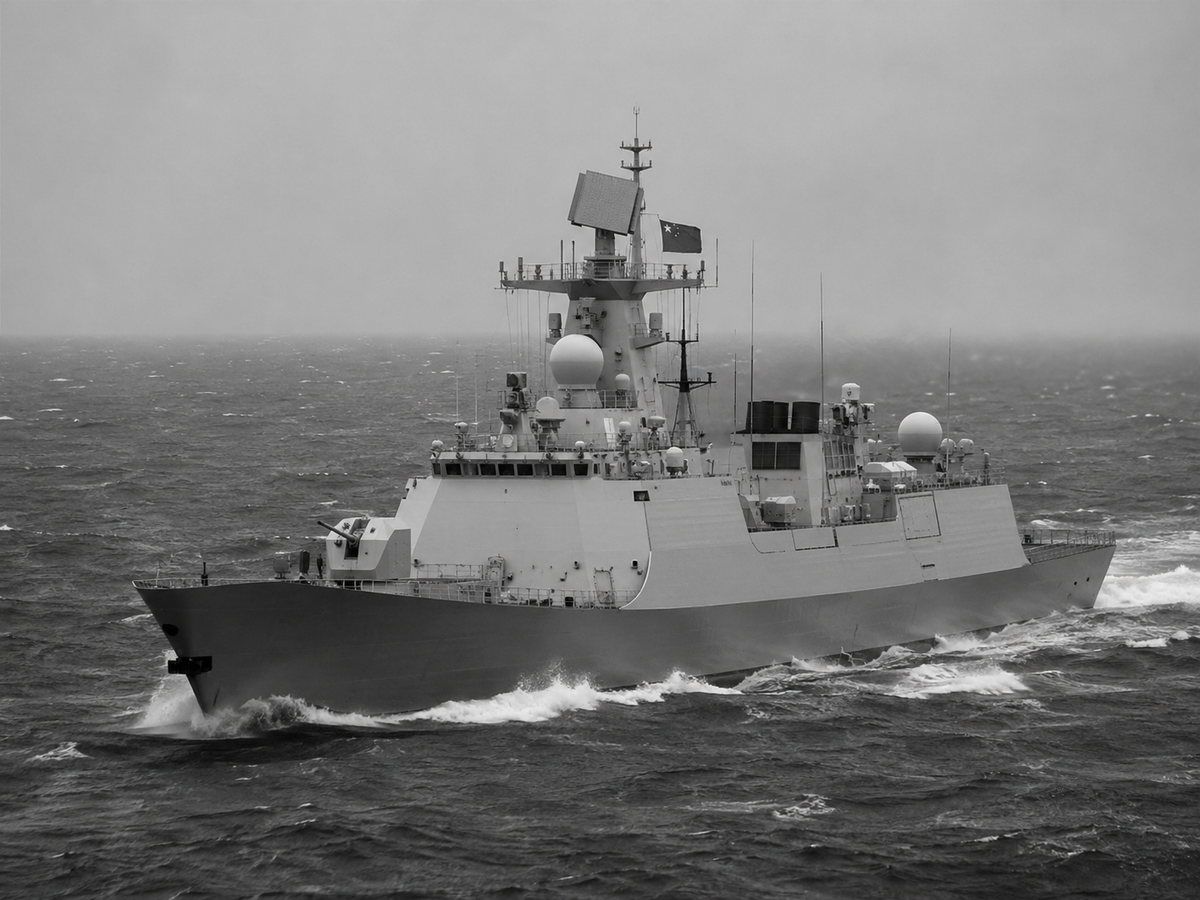
Recent military exercises by the People's Liberation Army (PLA) have increasingly focused on encircling Taiwan, establishing maritime and air superiority, and conducting blockade operations. These exercises have also grown in operational complexity, particularly in their coordination across different branches of the Chinese military and the integration of China Coast Guard assets. The Joint Sword exercises in 2024, Strait Thunder-2025A in April 2025, and Justice Mission 2025 in December all involved elements of a blockade, including simulated strikes against critical infrastructure, control of maritime approaches, and operations designed to prevent outside military intervention. More recently, on November 3, Taiwanese officials reported more than 100 Chinese naval and coast guard vessels operating across the western Pacific. The deployment included naval formations from three PLA theater commands, with forces positioned between Taiwan and Guam, suggesting a rehearsal of operations intended to isolate Taiwan from potential military assistance.
The prevailing assessment within the U.S. intelligence community is that China is developing the capabilities necessary to conduct military operations against Taiwan, but that Beijing has not established a fixed timetable for an invasion. According to Reuters, American officials increasingly consider an invasion before 2028 unlikely, citing shortcomings in PLA readiness and Beijing's possible preference to await Taiwan's 2028 presidential election. I believe this assessment risks underestimating the significance of China's preparations, particularly when it comes to a blockade or maritime quarantine. The sophistication and geographic scope of these exercises suggest detailed operational planning that goes considerably beyond political messaging or preparations for a hypothetical contingency. While political signaling is undoubtedly one objective, these activities also improve China's ability to execute an actual military operation, potentially with considerably less warning than Western planners anticipate.
There is currently insufficient evidence to conclude that a blockade or invasion is imminent. Available satellite imagery and other open-source indicators do not establish that China has entered the final stages of preparing a major military operation. Nevertheless, a full-scale invasion would require extensive logistical preparations that could become apparent over a period of weeks or months, whereas a maritime quarantine or more limited blockade could be implemented with considerably less warning, particularly if Beijing used an ongoing exercise as cover for the transition to actual operations.
We should therefore consider a scenario in which China attempts to impose a maritime quarantine or blockade on Taiwan during the remainder of Trump's presidency. This is a lower-probability but potentially catastrophic scenario that deserves serious consideration, particularly if Beijing perceives Trump as unusually weak, transactional, and reluctant to undertake military commitments that could threaten his domestic political interests. Chinese leaders may calculate that the current administration presents a more favorable strategic opportunity than its successor.
The conventional wisdom holds that China's dependence on international trade makes military action against Taiwan prohibitively expensive. A major conflict would almost certainly produce severe economic consequences for China, particularly if it resulted in comprehensive Western sanctions, disruptions to shipping, and restrictions on access to international markets. However, Beijing may be making a different calculation. Rather than imposing a comprehensive military blockade, China could attempt a selective maritime quarantine targeting military equipment, dual-use technologies, and other strategically sensitive shipments. Such an operation could be presented as a limited law enforcement measure, potentially conducted under the authority of the China Coast Guard, rather than an act of war, creating ambiguity over the appropriate international response.
Beijing may calculate that the United States, particularly under a transactional administration, would be unwilling to incur the considerable economic costs of severing trade with China over a limited maritime quarantine. This strategy could exploit differences between Washington and its allies, particularly if China allowed most commercial traffic to continue while selectively restricting shipments to Taiwan. The objective would be to progressively undermine Taiwan's sovereignty and military security without provoking the comprehensive international economic response that a full-scale invasion would almost certainly invite.
Taipei's options would be limited. Although Taiwan possesses a substantial navy and coastal defense capabilities, these forces are considerably outmatched by China's military. Taiwan may therefore choose a restrained response to a maritime quarantine for fear of provoking a broader Chinese military operation. Beijing may calculate that Taipei would be unwilling to escalate the confrontation into a full-scale military conflict, particularly if the quarantine were conducted primarily by the China Coast Guard rather than the PLA Navy. It may also calculate that Japan, Australia, and other regional powers would be reluctant to intervene militarily without American leadership, further reducing the likelihood of a coordinated international response.
One development that may complicate Beijing's calculations is the recent Democratic victory in the U.S. congressional midterm elections. Democratic control of both chambers beginning in January 2027 could result in a more assertive congressional response to Chinese coercion, including stronger sanctions, additional military assistance to Taiwan, and greater pressure on the administration to defend American commitments in the Indo-Pacific. Although Congress cannot independently dictate the president's military response, it could substantially increase the political and economic costs of American inaction.
The central risk is that Beijing may conclude it can achieve significant strategic gains through a limited maritime quarantine while keeping the economic and military costs below the threshold that would trigger a decisive Western response. Whether that calculation is correct is uncertain. The danger lies in the possibility that Chinese leaders believe it is.