Hollywood’s Damaged-Heroine Problem

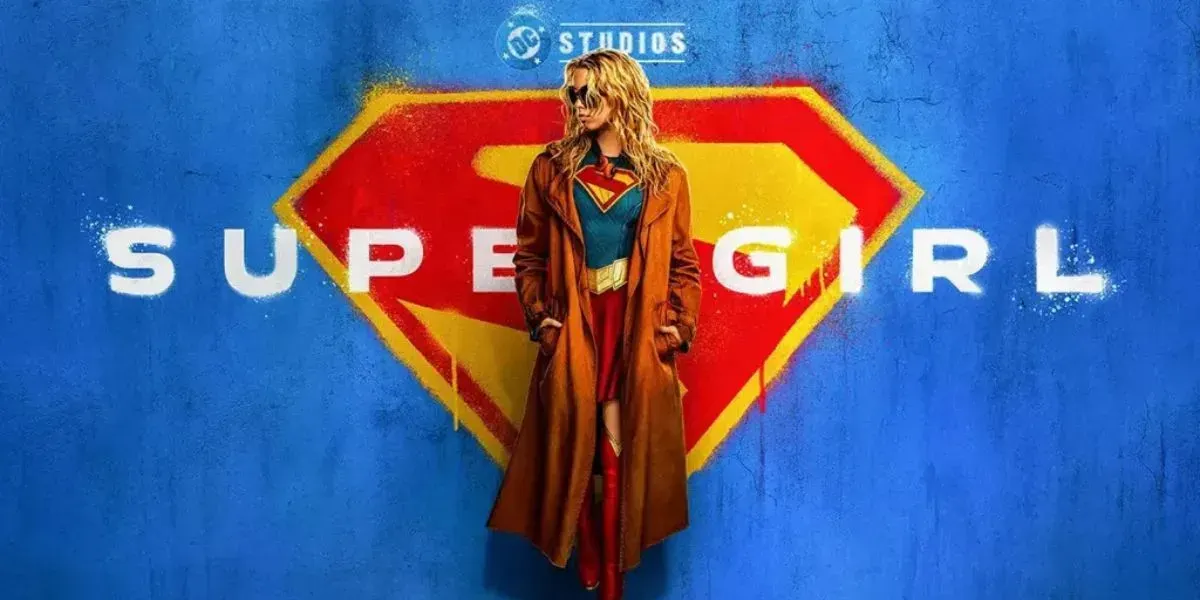
I’m growing increasingly frustrated with how Hollywood treats female superheroes. They create uninteresting characters with little to motivate them beyond trauma and resentment. Men are allowed to be optimistic and undamaged. A girl clearly cannot be strong and inspiring without being damaged in some way.
The contrast between Supergirl and the first Wonder Woman illustrates what Hollywood still hasn't consistently internalized about female-led superhero films. There is also something fundamentally misogynistic about the way female superheroes are often portrayed. To make a woman "strong," scripts often strip away anything traditionally feminine, replacing it with traits historically coded to toxic male antiheroes (the hard-drinking, emotionally unavailable lone wolf).
The problem with Supergirl isn’t Milly Alcock. She has charisma, screen presence, and enough vulnerability to suggest that a much better character could have been built around her. Even many lukewarm reviews identify Alcock as the film’s strongest element.
The problem is the conception of Kara: another wounded, cynical, sarcastic antiheroine whose drinking, trauma, anger, and emotional detachment are presented as depth. The official premise is literally an interstellar journey of “vengeance and justice.” Contrast that with Superman's optimism. A female superhero doesn’t become compelling merely by having Superman’s powers only with more trauma, more alcohol, and less optimism. That isn't Supergirl. At least not the Supergirl I grew up with.
Trauma can produce an interesting character, but trauma is not itself a personality. Neither is alcoholism. Neither is snark. These things become meaningful only when they reveal deeper conflicts, shape relationships, produce genuine consequences, and exist alongside a recognizable human personality. What does Kara love? What does she enjoy? What does she hope for? What makes her get out of bed when she isn’t angry, drunk, or pursuing revenge? What makes her laugh?
Wonder Woman understood this.
Diana was idealistic, curious, compassionate, occasionally naïve, capable of humor, and genuinely delighted by parts of the world she was discovering (I loved the scene where she discovered ice cream). She had flaws, but the film didn’t confuse unpleasantness with complexity. Her optimism was challenged by war and human cruelty, yet the story never treated hope as childish or embarrassing.
More importantly, Diana had an affirmative moral purpose. She didn’t become a hero merely because someone killed the wrong person and triggered a revenge plot. She left Themyscira because she believed suffering imposed an obligation to act. The No Man’s Land sequence worked because it expressed who she was: she couldn’t stand behind the trench while civilians suffered simply because everyone else had accepted that nothing could be done.
That is character-driven action. The spectacle emerges from the protagonist’s moral choices rather than interrupting them. Wonder Woman also allowed Diana to be warm, glamorous, feminine, sexually attractive, physically formidable, and morally serious at the same time. The film didn’t act as though femininity was incompatible with strength. Her costume was iconic rather than apologetic, and her chemistry with Steve Trevor gave the story emotional texture without reducing her to a romantic attachment. Wonder Woman understood the Cyndi Lauper line that “girls just wanna be girls.” We do, we really do.
Then there is the art of storytelling. Wonder Woman recognized the classic Greek concepts of hamartia (tragic flaw), anagnorisis (discovery of the truth), and, most importantly, arete (excellence and virtue). Her tragic flaw was her naïve certainty that humanity was fundamentally innocent and that Ares alone explained the war. Her discovery of the truth was not only that human cruelty and war could not simply be blamed on a deity, but also that human beings possess the capacity for heroism and sacrifice. Most importantly, she was a virtuous character and someone we could admire. This is good storytelling, which modern writers often ignore at their peril. We need to believe that, despite all the nonsense we see in the world today, there has to be some sense of justice and righteousness; otherwise, what is the point?
Hollywood repeatedly assumes that putting a woman at the center of a conventional superhero film will automatically attract more women. It won’t. A female protagonist is not a substitute for emotional depth, relationships, humor, beauty, moral purpose, or a story worth caring about.
The first Wonder Woman succeeded because Diana was someone audiences could understand, enjoy spending time with, and root for. She wasn’t written as a rebuttal to male superheroes or as a collection of fashionable psychological problems. She was written as a hero.
Fundamentally, Hollywood believes that superhero movies involving women need to remind us of real life and how awful things can be. We don’t watch superhero movies for that. We watch them because they offer us aspiration, moral clarity, hope, and excellence. Goodness knows how much we need that these days.