A NATO Ally, a Neo-Nazi Cell, and the GRU

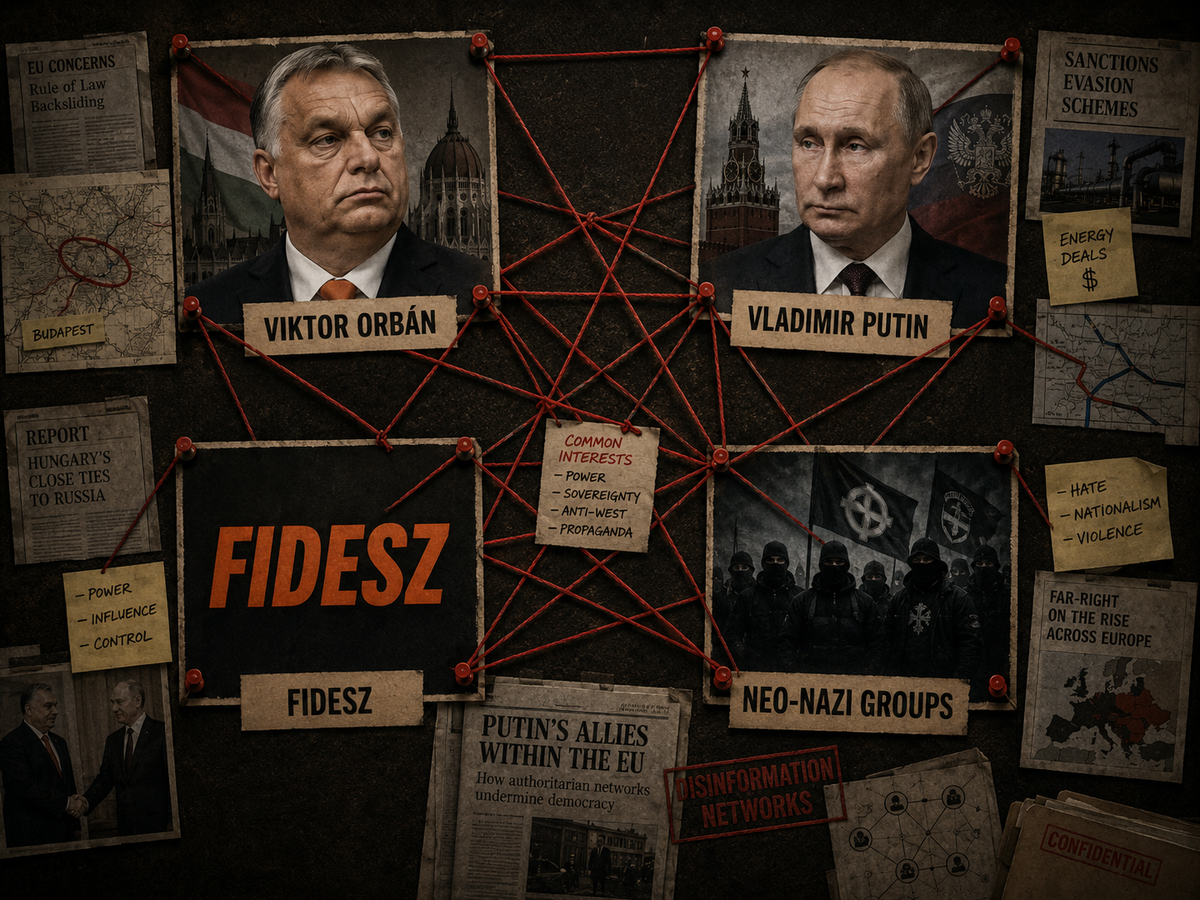
In the 2010s, Russian diplomats and GRU-linked personnel were reported to have maintained contacts with the Hungarian National Front, Magyar Nemzeti Arcvonal, or MNA, a neo-Nazi paramilitary group based around Bőny. On 26 October 2016, the group’s leader, István Győrkös, shot and killed Péter Pálvölgyi, an officer of Hungary’s National Bureau of Investigation, during a police search connected to illegal firearms.
According to later investigative reporting, Russian military-intelligence personnel operating under diplomatic cover trained MNA members in mock combat, with some drills disguised as airsoft exercises. Direkt36 reported that Russian military attaché personnel not only trained Hungarian neo-Nazis, but allegedly helped arm them. Hungarian military counterintelligence knew enough about the activity to expose and quietly remove at least one GRU officer in 2016.
The scandal did not end Russian activity in Hungary. It appears to have evolved from paramilitary contacts into a broader intelligence and influence environment. In 2024, VSquare reported that Budapest continued to host GRU-linked Russian military attachés even after Czechia, Poland, and Slovakia had expelled comparable figures. It also reported that Russia’s diplomatic footprint in Hungary remained unusually large for the Visegrád region.
Hungary was an attractive platform for Moscow’s European operations: it was an EU member state, part of the Schengen Area, and a NATO ally. It also had a government that was unusually lenient toward Russia, led by a prime minister who was even more so. According to a transcript reported by Bloomberg in April 2026, Viktor Orbán told Putin during a 17 October 2025 phone call: “In any matter where I can be of assistance, I am at your service.” The same transcript reportedly described Orbán comparing Hungary to a mouse helping a lion, and saying he was ready to assist Putin where he could.
In May 2026, VSquare reported that Hungary quietly expelled Artur Sushkov, a Russian Embassy third secretary identified by Hungarian authorities as an SVR officer under diplomatic cover. Orbán’s Fidesz party had lost a historic election the previous month. Sushkov allegedly spent years cultivating right-wing and foreign-policy circles close to the Orbán government, including think tanks and institutions linked to Balázs Orbán, no relation to Viktor Orbán, a Hungarian university professor and politician who served as the prime minister’s political director.
The larger pattern is hard to dismiss. Hungary under Fidesz was repeatedly described by former officials, investigators, and journalists as a permissive environment for Russian intelligence activity: GRU, FSB, and SVR presence; Russian military attachés; the Budapest-based International Investment Bank; cyber operations; Ukraine-related logistics targeting; and repeated Hungarian obstruction or dilution of EU Russia policy.
That is the real significance of the post-Orbán moment. For years, the depth of Russian activity in Hungary was exposed mainly by independent journalists, allied services, and former officials speaking from the margins. Orbán’s defeat in April 2026 changed the institutional calculus. Security agencies that had operated under tight political constraints appeared to have more room to act.
The Sushkov expulsion was not an isolated cleanup operation. It was an early glimpse of what accountability may uncover: a NATO and EU member state whose political leadership spent years tolerating, minimizing, or shielding Russian intelligence activity at the expense of European and transatlantic security.